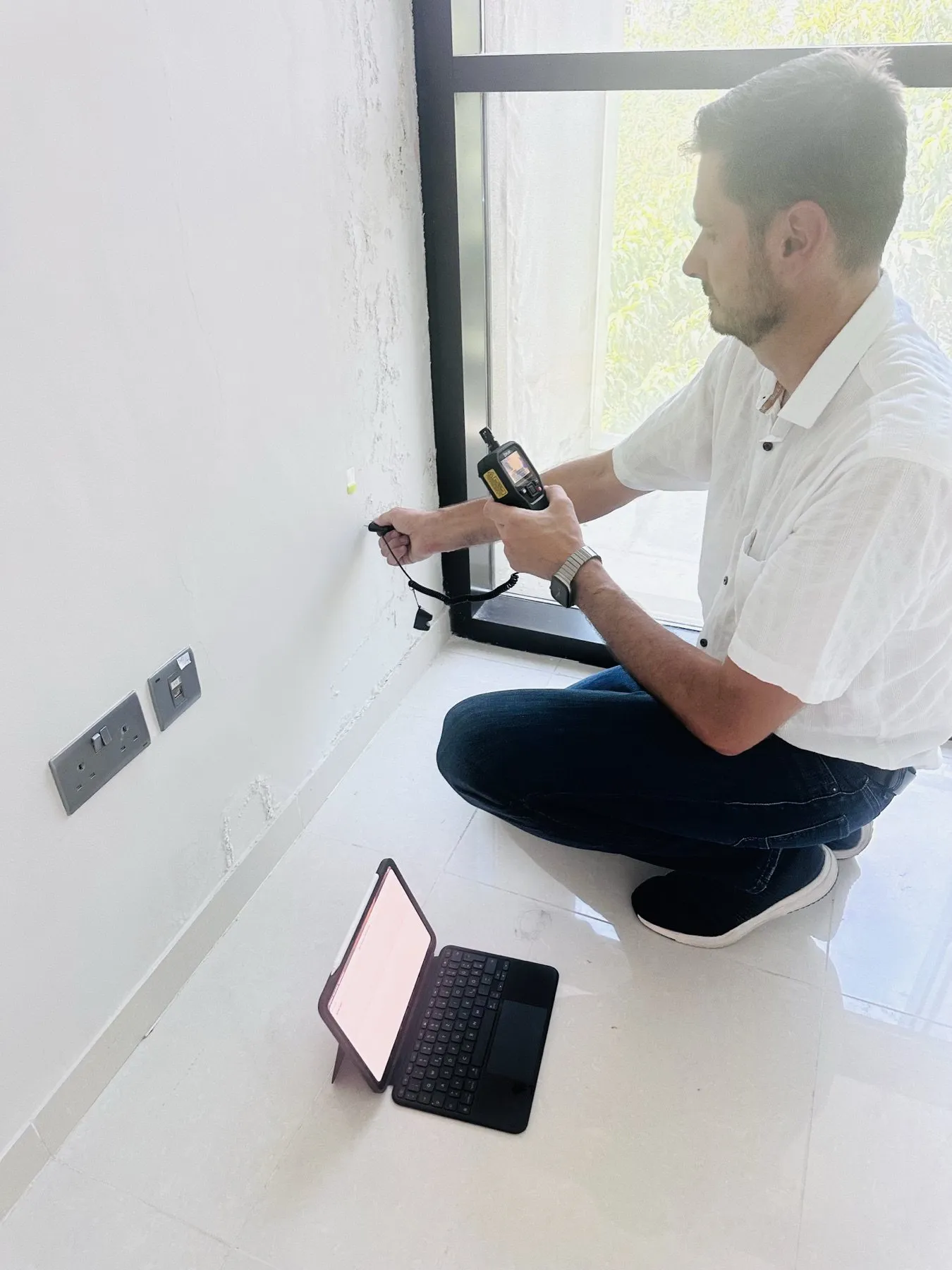
The developer has invited you to the handover. Before you sign the handover documents and accept the keys, you have the strongest position you will ever have to get defects fixed. Snagging means using that moment: inspecting the new unit systematically and recording every defect in a list the developer’s team can work through.
This checklist follows the order I use in a snagging and handover inspection. You can use it to prepare, to understand what an inspection covers, or to check a unit yourself. Where a point needs an instrument rather than the eye, I say so.
Before the appointment
- Collect the handover invitation, the floor plans and any checklist the developer has sent. They show which areas need particular attention.
- Find the defect liability period in your sale and purchase agreement and note the date. You will need it after handover.
- Make sure water and electricity are connected. Without them, plumbing, drainage, electrics and air conditioning cannot be fully tested under operation.
- Plan enough time and, if possible, attend. If you live abroad, an inspector can walk you through the findings by video call.
The checklist, area by area
Walls and ceilings
- Cracks at junctions between different materials, around door frames and at ceilings.
- Scratched, chipped or uneven surfaces and paint that covers more than it should.
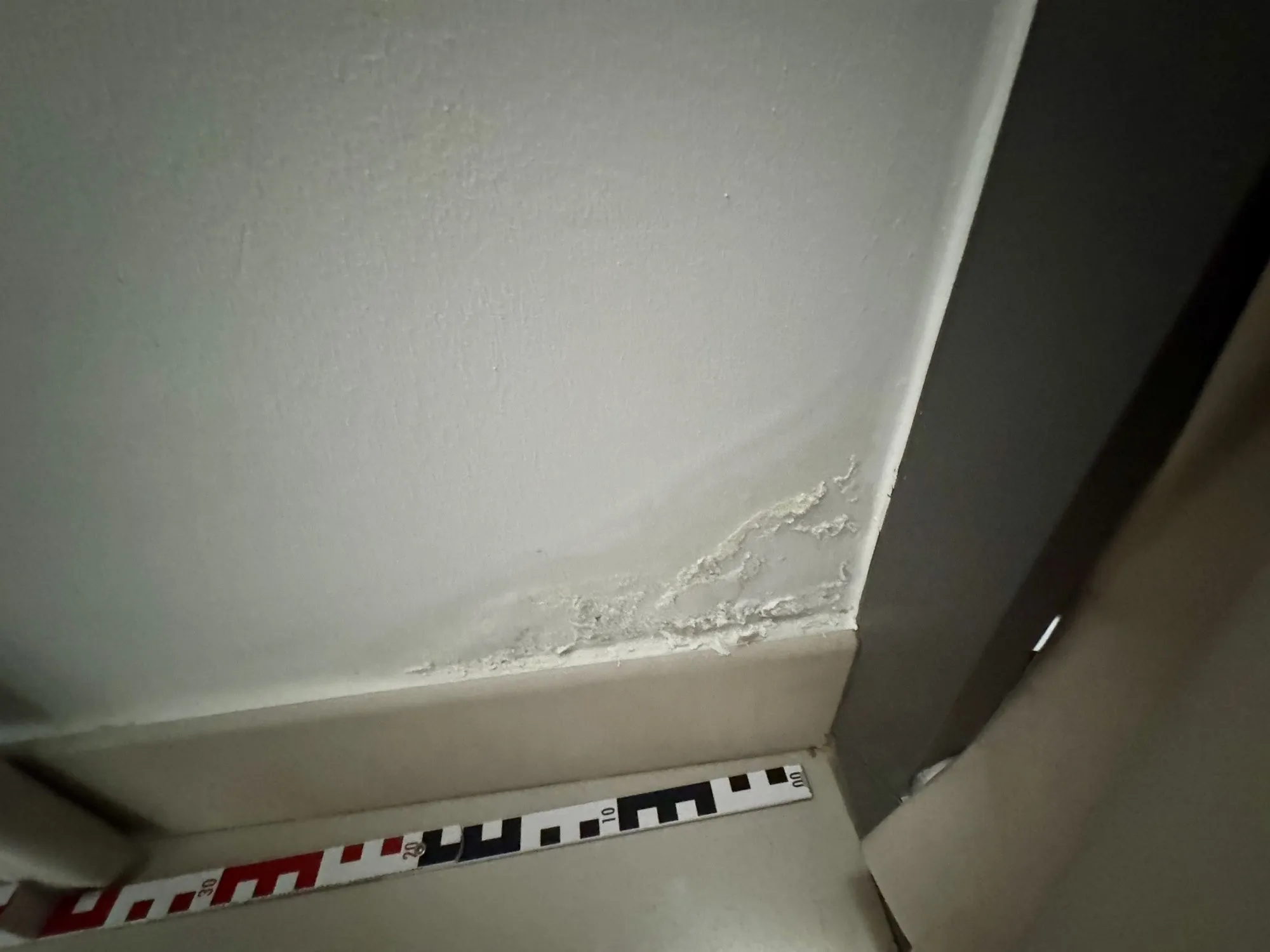
- Stains or patches of fresh paint in one spot only. Ask why.
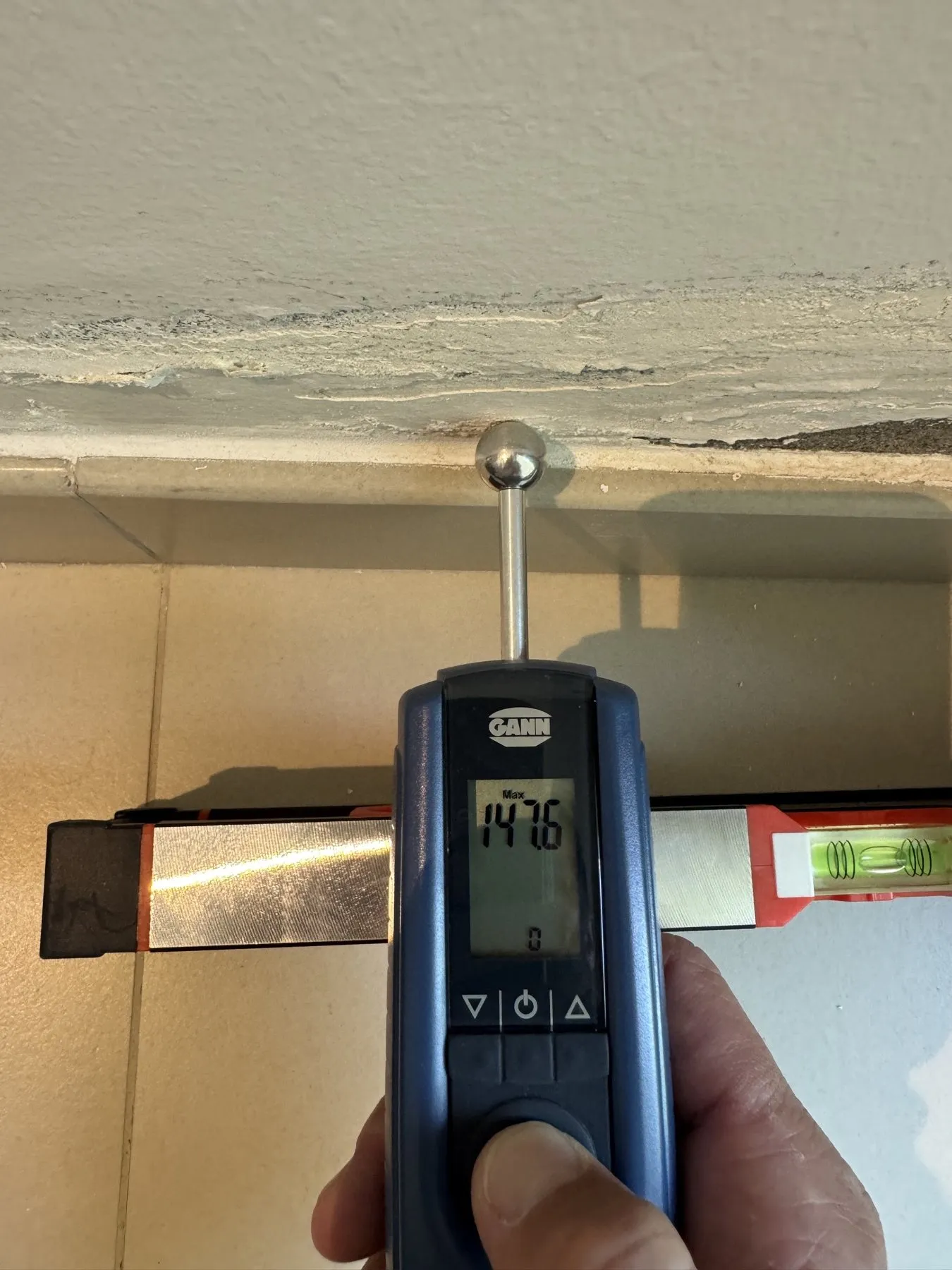
- Moisture behind fresh paint is often invisible. At walls next to showers, kitchens and at external walls, a moisture reading gives the first indication.
Floors and tiles
- Hollow tiles, found by tapping. A different sound points to a tile that may not be fully bonded and is assessed further, typically on terraces, in showers and along thresholds.
- Cracked, scratched or chipped tiles, uneven joints and lippage between tiles.
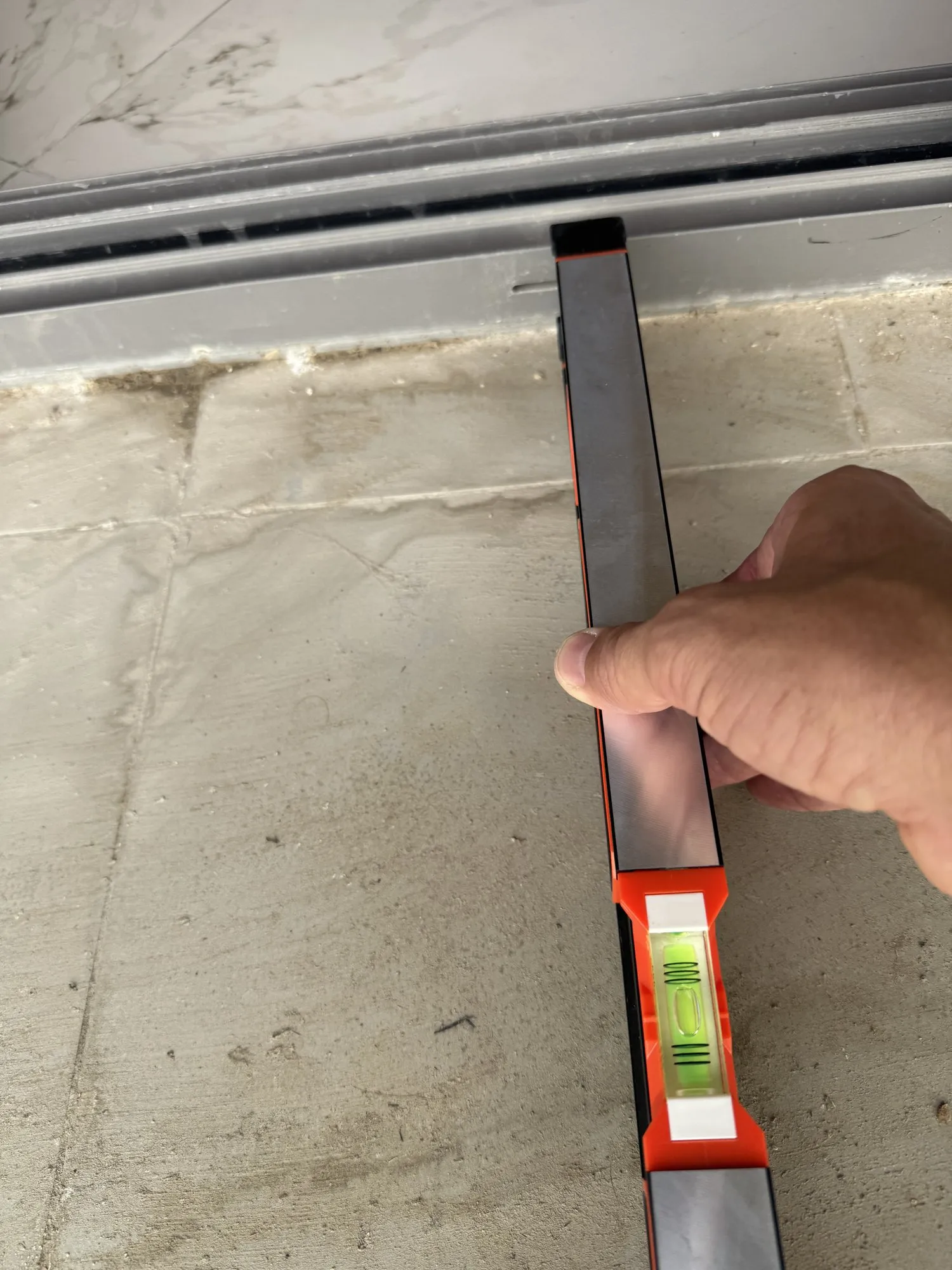
- Levelness of floors, checked with a spirit level rather than by eye.
- Falls in showers and on balconies: water has to run to the drain, not stand near the wall.
Moisture and waterproofing
- Moisture readings at wet areas, façades and junctions.
- Sealant joints at penetrations, junctions and around sanitary fittings: complete, clean and present, not smeared or missing.
- Waterproofing details at thresholds to balconies and terraces, as far as they are visible and accessible.
- Behind access panels, in shafts and under sinks, as far as they can be opened without damage: pipe routing, open insulation and first traces of moisture that no handover walk looks at.
Windows and doors
- Doors that close cleanly, without rubbing or gaps, and fittings that are not loose.
- Windows and sliding doors that open, close and lock as they should.
- Sealant joints around window frames and at sills, complete and attached.
Plumbing and drainage
- Water pressure at every tap. Noticeable differences between taps are recorded.
- Drains that actually drain: run water in showers, basins and floor drains and watch whether it goes away.
- Loose fittings and anything that drips under sinks once the water has been running.
Air conditioning and MEP
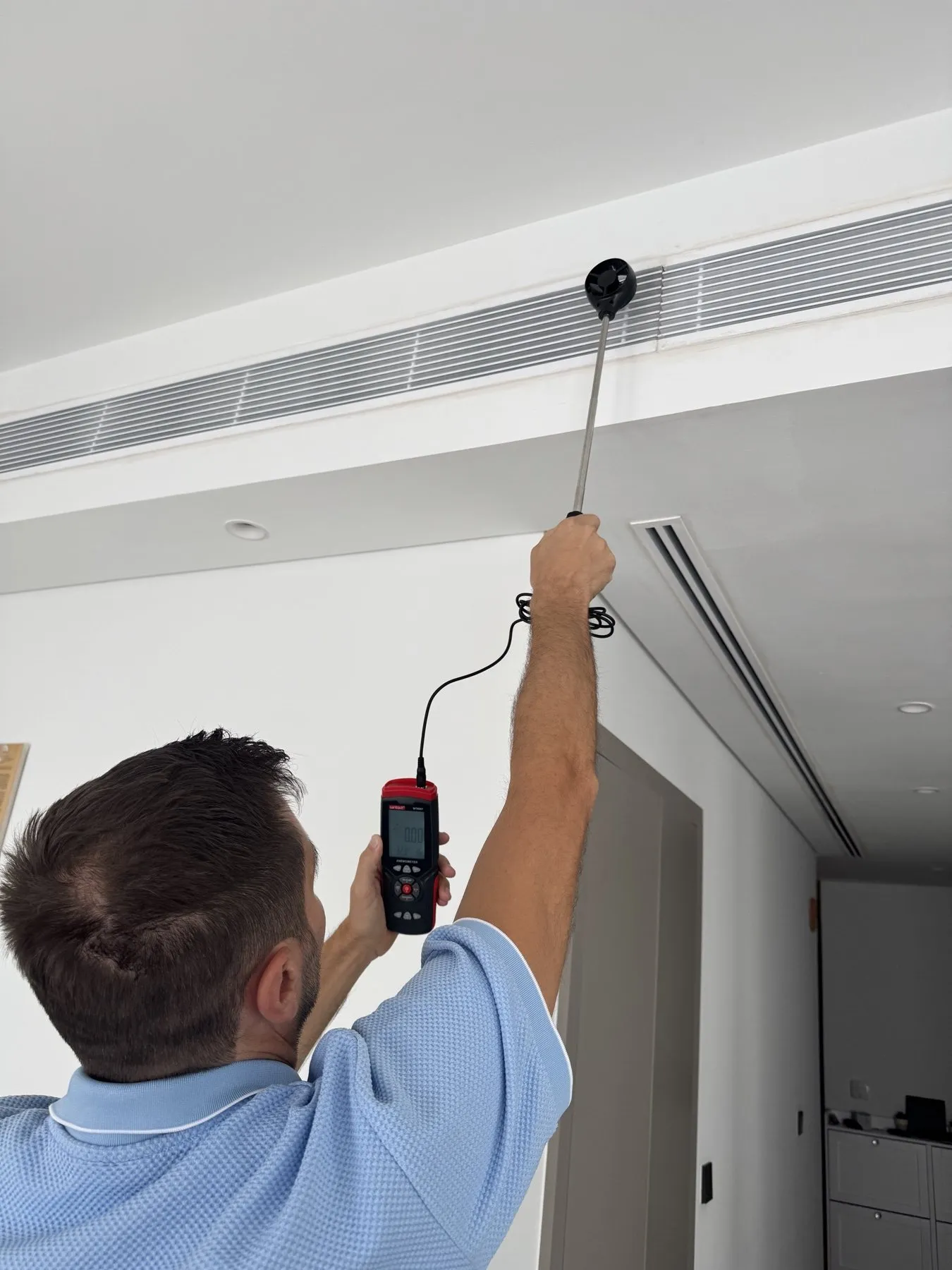
- Airflow at every outlet. Noticeably weak or uneven airflow is recorded and assessed against settings and operation.
- Condensate lines that are routed and fixed properly, so the water reaches its drain point.
- Supply and return working together: air has to be able to come back, otherwise a room may feel cool while moisture stays in it.
This matters more in Dubai than elsewhere. An AC system that circulates air without removing enough moisture can cause condensation and mould later, as described in why AC condensation damages ceilings.
Electrics
- Functional test of switches, sockets and lighting in every room.
- Thermography where it adds insight, for example at electrical connections. A thermal image shows temperature differences, not defects as such.
Outdoor areas of townhouses and villas
- Roof areas and terraces: falls towards the drains and away from the building.
- Drains and outlets in place and free, and, where visible, connected.
- Thresholds between inside and outside, where waterproofing decides how the building behaves in the first heavy rain.
- External drainage and the surroundings of a pool, if there is one.
Handovers in Dubai almost always take place in dry weather and often before the building has been through a summer. What the first heavy rain can reveal is described in villa leaks after the rain. A handover inspection cannot predict all of it, but it can record what is already visible or measurable on the day.
What makes a snag list work
A snag list only helps you if the developer’s team can act on it. An item such as “bathroom not good” leads to a discussion. An item such as “master bathroom, shower tray, standing water near the wall, fall towards the drain insufficient, photo 14” makes assessment and repair much easier.
- Every item has a location, a photograph, a short description and a severity.
- Measured values where they matter: moisture, falls, water pressure, airflow.
- Defects are kept apart from matters of taste. That keeps the list credible.
- A clear priority: what must be fixed before you accept, and what can be handled during the defect liability period.
What happens to the snags after the inspection
The list goes to the developer’s handover or customer care team. Once the developer reports the items as fixed, a re-inspection shows whether they actually are. If you accept the unit before the defects are recorded, your negotiating position becomes weaker. Ideally, defects are recorded before you sign. Questions about your contract belong with a lawyer.
After handover, two things matter: the liability set by law and the defect liability period in your contract. For jointly owned real property in Dubai, Article 40 of Law No. 6 of 2019 makes the developer liable for one year from handover of the unit to repair or replace defective installations such as mechanical, electrical, sanitary and sewerage works. If the owner refrains from taking possession, that year runs from the completion certificate of the project. For defects in the structural parts, the developer remains liable for ten years from that completion certificate, subject to the provisions governing contractor agreements1. An agreement made after the law came into force that contradicts the article is void, and, subject to these rules, owners keep the rights and warranties against developers that other legislation grants them1. Your sale and purchase agreement sets out the defect liability period in your own case.
The first Dubai summer often shows what the handover could not: new cracks, sealants that detach, moisture that only appears under real use. That is why a DLP inspection a few weeks before the period ends belongs to the same plan as the snagging. It checks whether the reported items were really fixed and records what is new while the period is still open, so possible claims can be checked in time.
What a snagging inspection can and cannot do
A serious inspection names its limits. It does not open tiles, walls or sealed ceilings without the owner’s consent. It cannot guarantee that every concealed defect, or a leak that only appears in heavy rain, will be found. The report documents what is visible and measurable on the day and creates a dated reference point. If something changes later, you can compare it with what was recorded at handover.
It also matters who inspects. A defect list is only as credible as the person behind it. True Line inspects and documents, and does not sell, broker or repair, so there is no interest in a bigger or smaller list than the unit deserves. How a finding is narrowed down step by step is described in my method.
Conclusion: measure before you sign
Handover day is the moment when your position to have defects fixed is strongest. A checklist helps you not to forget an area. Measurement shows much of what the eye misses. If you want this done for your unit, get in touch before the handover date, so the inspection takes place before you accept the keys.

About the author
Harald Wagner is a DEKRA certified expert for structural damage and an InterNACHI Certified Professional Inspector. He headed a geotechnical institute in Germany for 19 years and now inspects properties in Dubai with True Line, independent of sales, brokerage and repair work. More about Harald.