Establishing the cause of cracks, moisture damage, leaks, settlement and delamination. Structured as a German expert report: instruction and purpose, method and limits of the investigation, findings, assessment, and prioritised recommendations. Documented to evidentiary standard on request, for disputes with a developer, landlord or insurer.
Who this is for
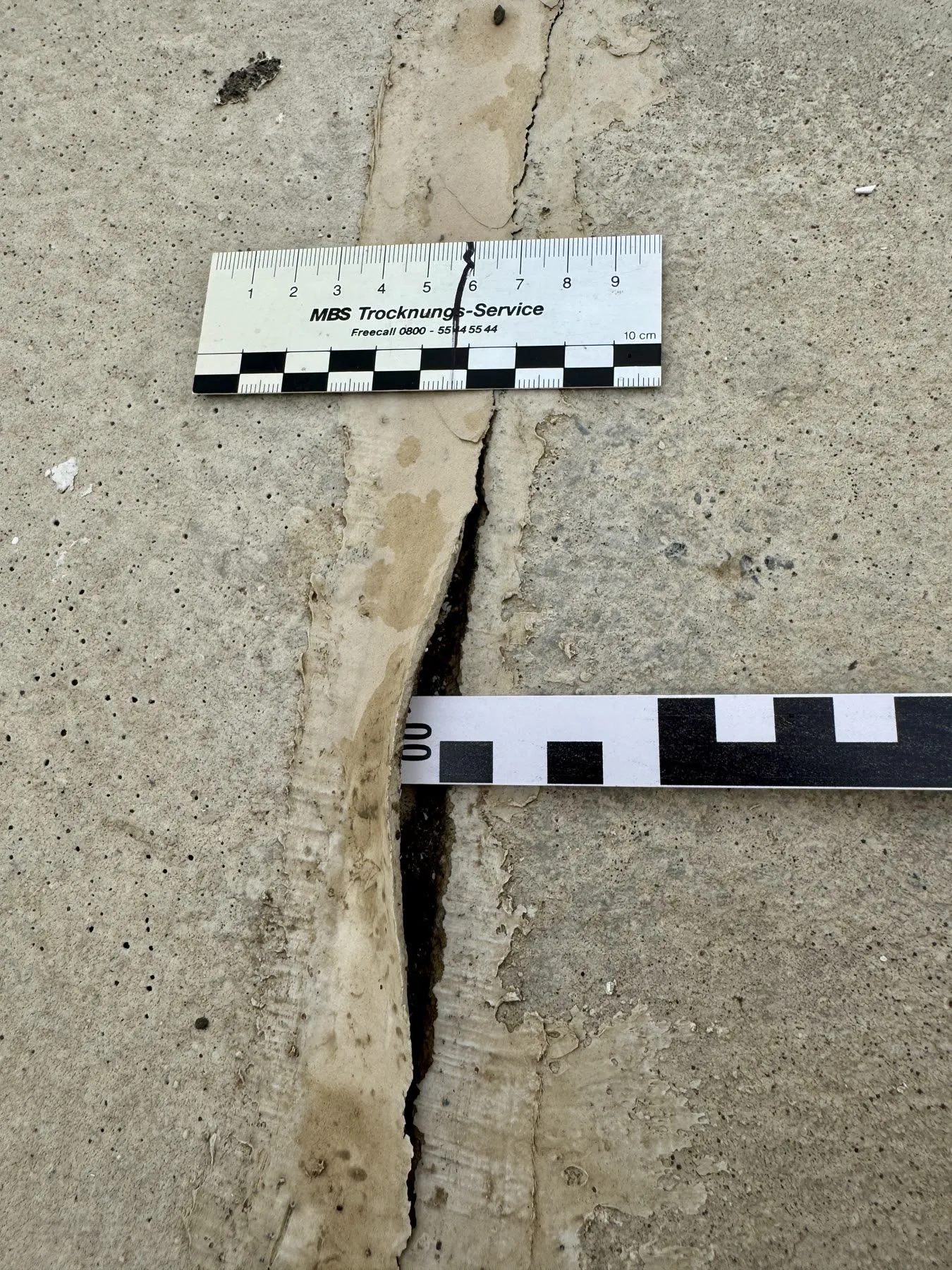
- A crack has appeared in a wall or ceiling, or an existing crack keeps opening again after it was filled.
- Water is coming through a ceiling, at a window or below a terrace, and nobody can say where it enters.
- Tiles sound hollow, render is coming away, or a coating is blistering and peeling.
- You are in a dispute with a developer, landlord or insurer and need a documented, technically reasoned statement of cause.
- A repair has already been carried out, and the damage has come back.
- Your villa showed damage after heavy rain, at roof junctions, terraces or around the pool.
What I check
- Cracks: design flaw or poor workmanship, structurally relevant, and is the building still watertight?
- Leaks and water damage: where the water really comes from
- Settlement, delamination and failed finishes
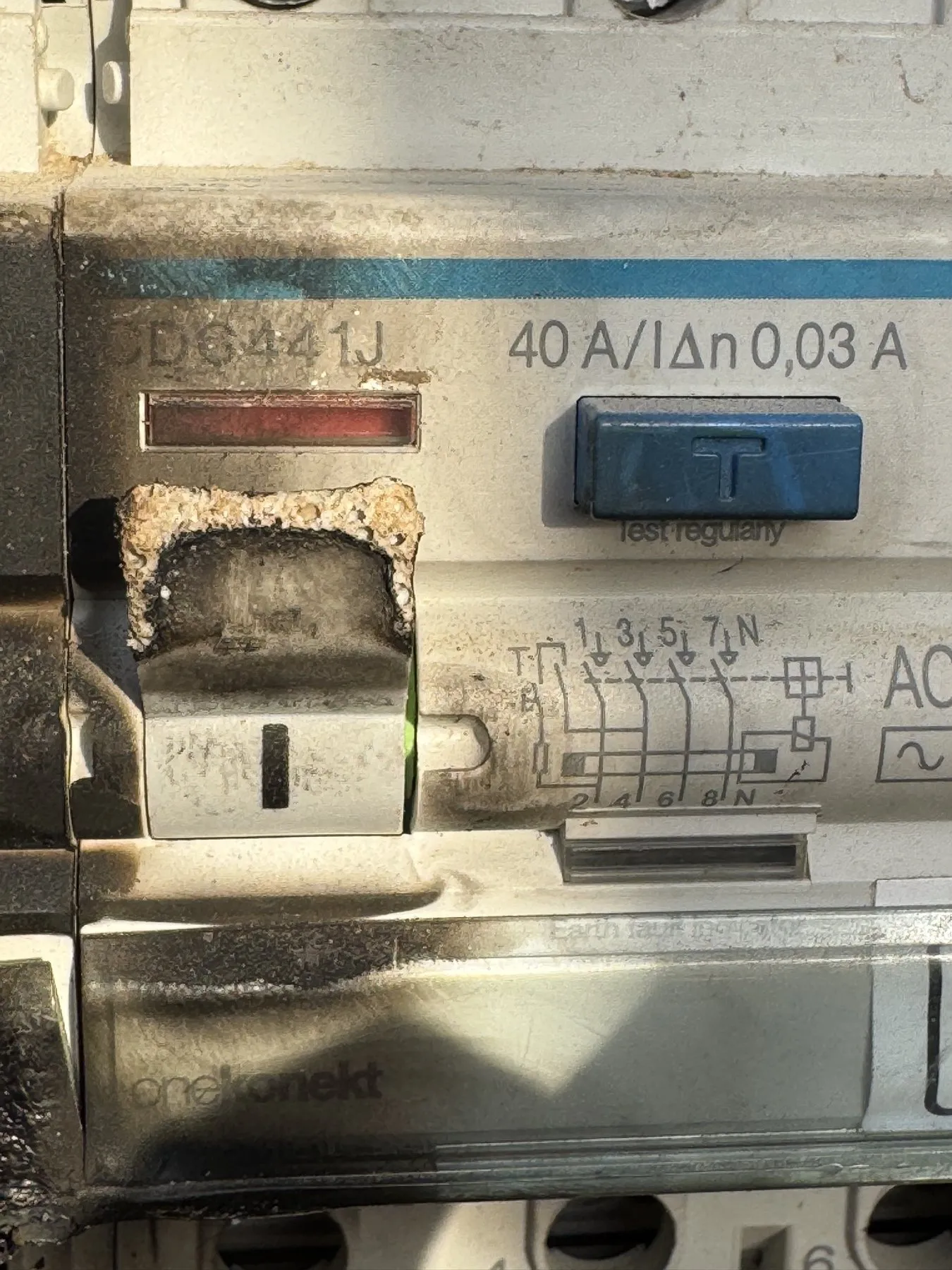
- Inspection behind access panels, where services and damage hide
- Villas: pool surrounds, pump rooms and service shafts
- Report structure: purpose, method, findings, assessment, recommendation
What I typically find
- Moisture ingress at roof junctions, parapets, terraces, balconies and door thresholds, often where different materials meet.
- A stain on the ceiling that sits metres away from the point where the water actually enters.
- Leaks behind access panels: AC condensate lines, water pipes and drains that have been dripping for months.
- Cracks at material transitions and missing or poorly detailed movement joints, often first visible after the first summer.
- Hollow tiles and detached render, found with the tapping rod long before anything falls.
- Swollen gypsum board and lifting paint around AC outlets, caused by condensation in the ceiling void.
- Drains and falls that lead water towards the building instead of away from it.
- Earlier damage that was painted over instead of repaired, so the cause is still active.
How it works
- 01Instruction and question
We agree what exactly is to be clarified and for what purpose: a repair decision, a defect notice to the developer or a dispute. The purpose defines the depth of the investigation.
- 02History and documents
I ask when the damage appeared, when it gets worse and what has already been done. Existing reports, photographs and maintenance records are reviewed.
- 03Investigation on site
Visual inspection and targeted measurement: moisture, crack widths, endoscopy behind panels and in voids, tapping, and leak tests where they help. Every finding is photographed and located.
- 04Narrowing down and exclusion
Possible causes are listed and checked one by one. What measurement rules out is documented as carefully as what it confirms.
- 05Assessment and recommendation
The cause, its significance and the necessary measures are set out in a clear order of priority.
- 06Explanation and later check
I go through the report with you. On request I check after the repair whether it actually worked.
Damage pattern, point of entry and cause are three different things
After the heavy rain in March 2026 I saw it in several villas: the stain on the ceiling was not where the water came in. Moisture travels within building layers, along pipes and through junctions, and appears somewhere else entirely. Whoever treats only the stain leaves the cause in place.
A professional damage analysis therefore separates three questions. What does the damage look like? Where does the water or the movement enter? And what is the actual cause behind it, for example a failed junction, a missing fall or a waterproofing layer that was never closed? Only the answer to the third question tells you what the repair has to achieve.
Cracks: design flaw or poor workmanship?
For every crack I ask three questions. Is it the result of a design flaw or of poor workmanship? Is it structurally relevant? And is the building still watertight? Not every crack is a defect, and not every crack leaks. Its significance depends on location, pattern, width, depth and the component affected. It becomes critical where layers that carry or hold back water are affected.
A single measurement is a snapshot. Only a second reading at the same point, weeks later, shows whether a crack is still moving. A crack that has come to rest is assessed differently from one that is still working.
Settlement is a question of its own. Here my nineteen years running a geotechnical institute in Germany help: whether the ground, the foundation or the structure above is the starting point can often be narrowed down from the crack pattern before anything is opened.
Why the cause also decides who pays
Under Law No. 6 of 2019 a developer in Dubai is liable for structural defects for ten years, and for non structural defects such as AC, electrical and plumbing for at least one year from handover. Which period applies often depends on the cause. A simple AC fault falls within the one year period. If condensation leads to persistent water intrusion that affects the building fabric, the case can move into the ten year period instead.
This is why I establish the cause before anything is repaired. Once the traces have been removed, what happened can rarely be reconstructed. I do not give legal advice: where a finding has legal consequences, I recommend involving a lawyer.
Proven, probable, open
Not every cause of damage can be established beyond doubt. My reports therefore distinguish between proven causes, reasoned assumptions and remaining uncertainties, and they state what would still be needed to close the gap. Where several causes act together, the report says so.
Why it matters
This is the core of True Line. A defect without its cause comes back, and the repair is paid twice.
What this inspection is not
- No destructive opening of walls, floors or ceilings without your express consent. Where opening is not approved, the report states what remains open.
- No repair work. The recommendation names the necessary measure, not the contractor, and my execution company True Novaleix does not carry out work on a property where I have written the expert report.
- No legal advice. Where a finding has legal consequences, a lawyer should be involved.
- No guarantee that every concealed defect, or a leak that only appears in certain weather, is found. That limit belongs to any serious assessment.