Condition documentation on moving in and moving out, room by room, with photographs and a dated record, and moisture readings at critical points on request. Your evidence if damage or the deposit is later disputed. For landlords it is the documentation that lets the tenancy end without friction: what was there at the start, what has changed, what has to be put right.
Who this is for
- You are about to move into a rented apartment or villa in Dubai and want the existing condition recorded before your furniture goes in.
- You are moving out and want to show that you are handing the property back in the condition you received it, apart from ordinary use.
- You are a landlord and want a neutral record at the start of a tenancy, so the end of it does not turn into an argument.
- You manage several units for owners abroad and need consistent, comparable records from one independent source.
- You have noticed a stain, a smell or a damp patch shortly after moving in and want it on record before anyone can say you caused it.
What I check
- Room by room photo record with location
- Existing damage, wear and cleanliness
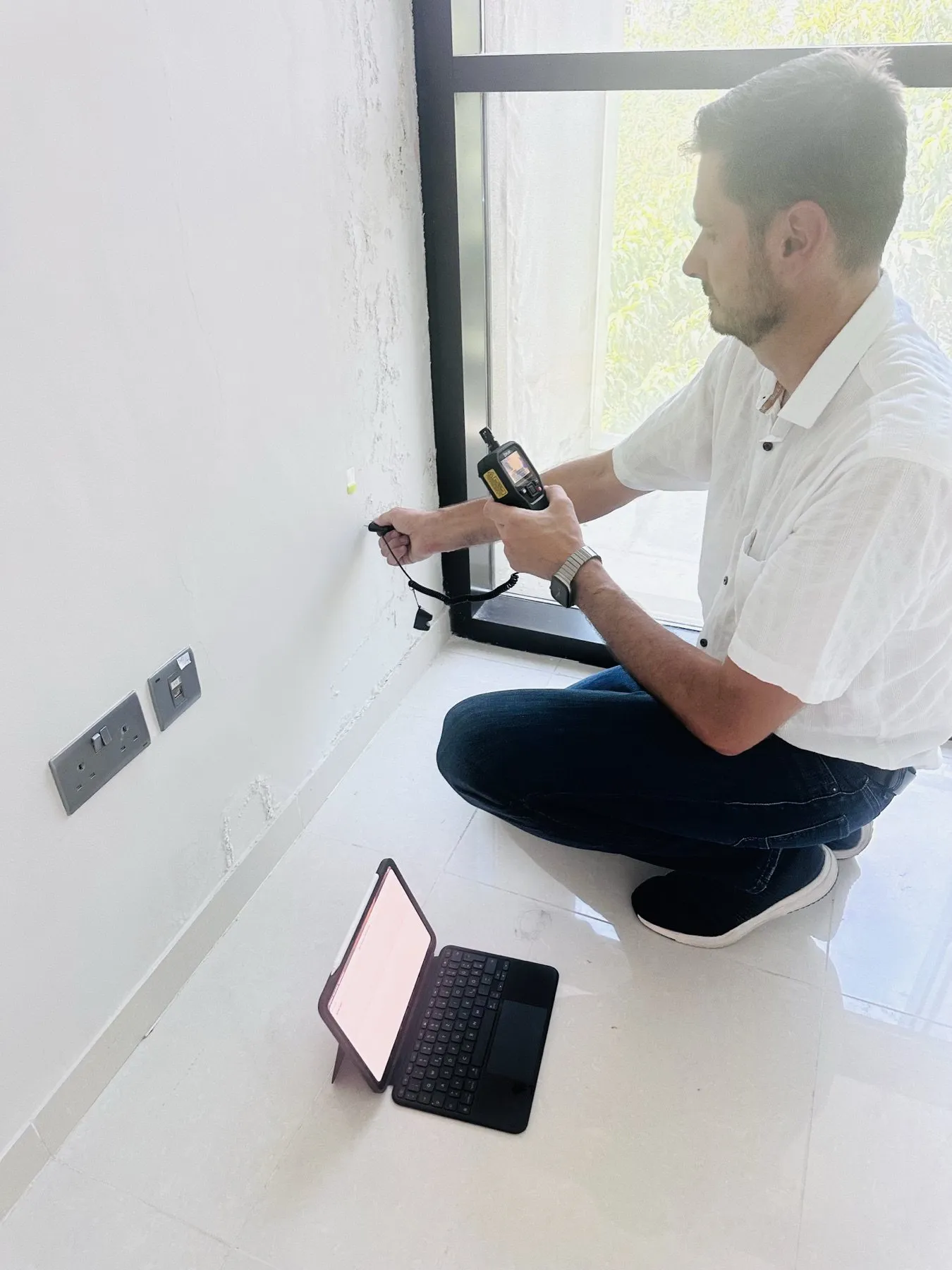
- Moisture readings at critical points on request
- Air conditioning and appliances in working order
- A dated PDF signed by an independent expert
What I typically find
- Existing damage that nobody mentioned: chipped tiles, scratched floors, damaged doors and joinery, cracks in plaster.
- Fresh paint over a patch that is still damp underneath, measured with the moisture meter rather than guessed.
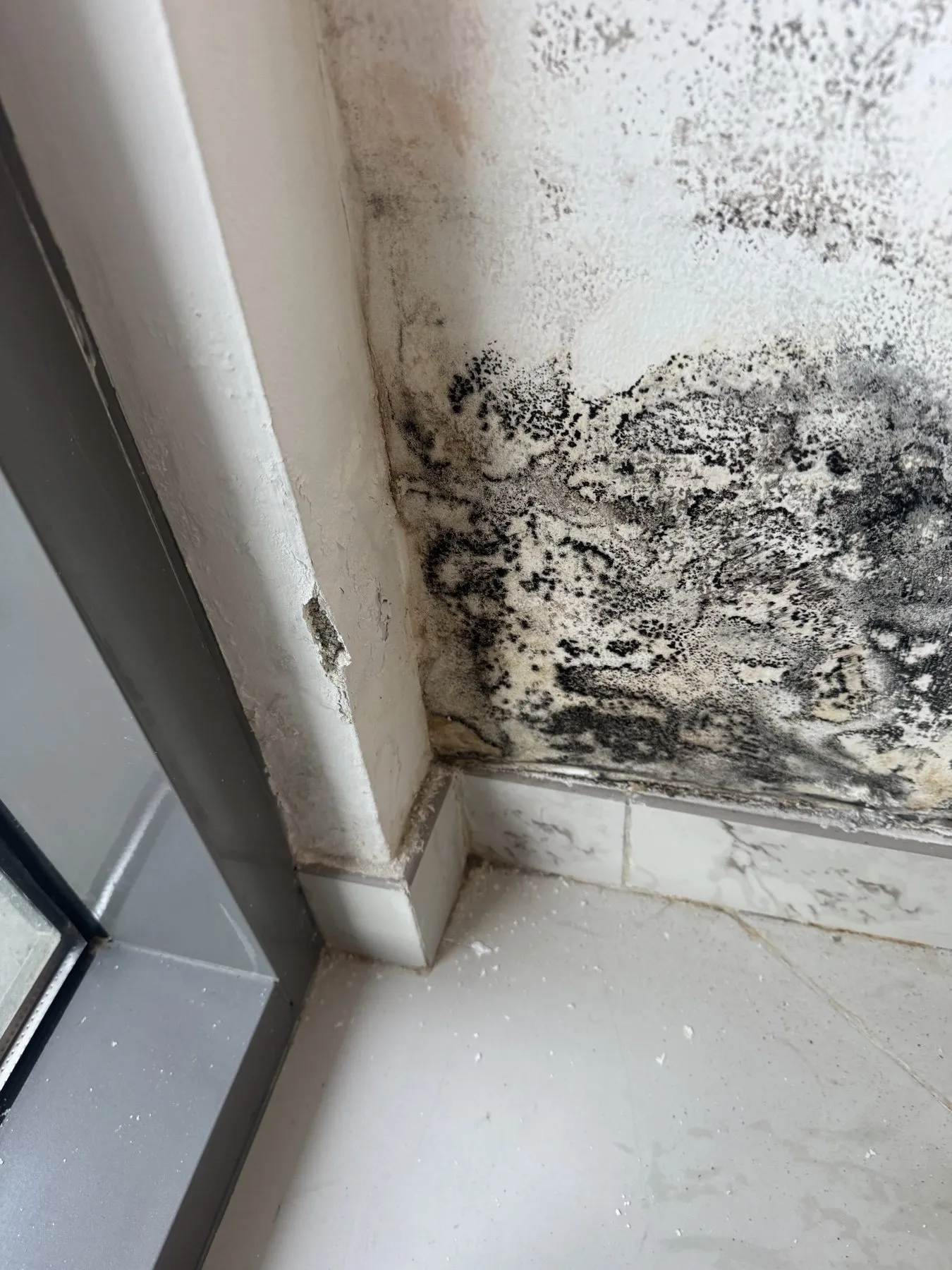
- Mould or dark staining behind wardrobes, in bathrooms and around window frames.
- AC units that run but cool poorly, outlets with weak airflow, and condensate drainage that drips.
- Slow drains, low water pressure at individual taps and leaking traps under sinks.
- Appliances, sanitary fittings and fixtures that do not work or are incomplete.
How it works
- 01Agree the scope
We agree whether you need a move-in record, a move-out record or both, and whether moisture readings at critical points should be included.
- 02Room by room record
I go through every room in the same order and photograph walls, floors, ceilings, fittings and appliances, each with its location. Existing damage is described, not just photographed.
- 03Function and moisture
AC, water, drainage and appliances are switched on and checked. On request I take moisture readings at wet areas, external walls and window junctions.
- 04Dated report
You receive a dated PDF, signed by me as an independent expert. Both parties can work from the same document.
- 05Comparison at move-out
If I made the move-in record, the move-out record follows the same structure, so changes can be compared position by position.
Why an independent record carries more weight
Most tenants take a few phone photos on the day they move in. Months or years later those photos rarely show what is needed: the right angle, the right corner, a reference to where in the room something is. And they come from one of the two parties to the dispute.
An independent record is made by someone who earns nothing from the outcome. It follows a fixed structure, every photograph has a location, and existing damage is described in words. A landlord, a tenant and, if it comes to that, the Rental Disputes Centre can all read the same document and see the same thing.
Moisture: the damage that appears after you move in
A freshly painted apartment can hide a moisture problem for weeks. If a stain then appears behind your sofa, the question is quickly who caused it. A moisture reading on the day you move in answers that question in advance: the wall was dry, or it was already damp.
In Dubai moisture inside a cooled home often has its source in the air conditioning or the building envelope, not in the way the tenant lives. When the actual surface temperature of a wall, window or pipe falls below the dew point of the air next to it, water can condense there. A room that feels cool does not prove that humidity is under control. Recording the condition at the start gives both sides a fair basis if this becomes an issue later.
The landlord’s perspective
For a landlord the move-in record is not only protection against damage. It is the document that lets a tenancy end smoothly: what was there at the start, what has changed, what has to be put right. When both parties sign off the same starting point, the end of the tenancy is a comparison rather than a negotiation.
For landlords who want to know how the property is treated during the tenancy, there is a separate service: the inspection of let properties, compared against the move-in record.
Why it matters
Deposit disputes are decided by evidence. A record made by an independent expert carries more weight than your own phone photos.
What this inspection is not
- No decision on who pays for what. Whether a change is ordinary wear or damage is for the parties, or the Rental Disputes Centre, to decide. The record delivers the facts.
- No legal advice on tenancy contracts or deposit claims.
- No repair or cleaning work. I record the condition, I do not restore it.
- No hidden defect search behind walls or under floors. Where a reading suggests a problem, I note it and recommend the right investigation.