Investigation where hazardous substances or indoor air contamination are suspected, with sampling, assessment and recommended action. Particularly relevant where children live in the household.
Who this is for
- There is a persistent musty or unusual smell that cleaning does not remove.
- Members of the family, especially children, often feel unwell at home and better elsewhere.
- The air feels stale or heavy, particularly in the bedrooms at night.
- There has been water damage or mould, and you want to know whether the indoor air is affected.
- You have moved into a freshly renovated or newly handed over property and want certainty about the indoor air.
- A suspicion of hazardous substances needs to be clarified before you decide on further steps.
What I check
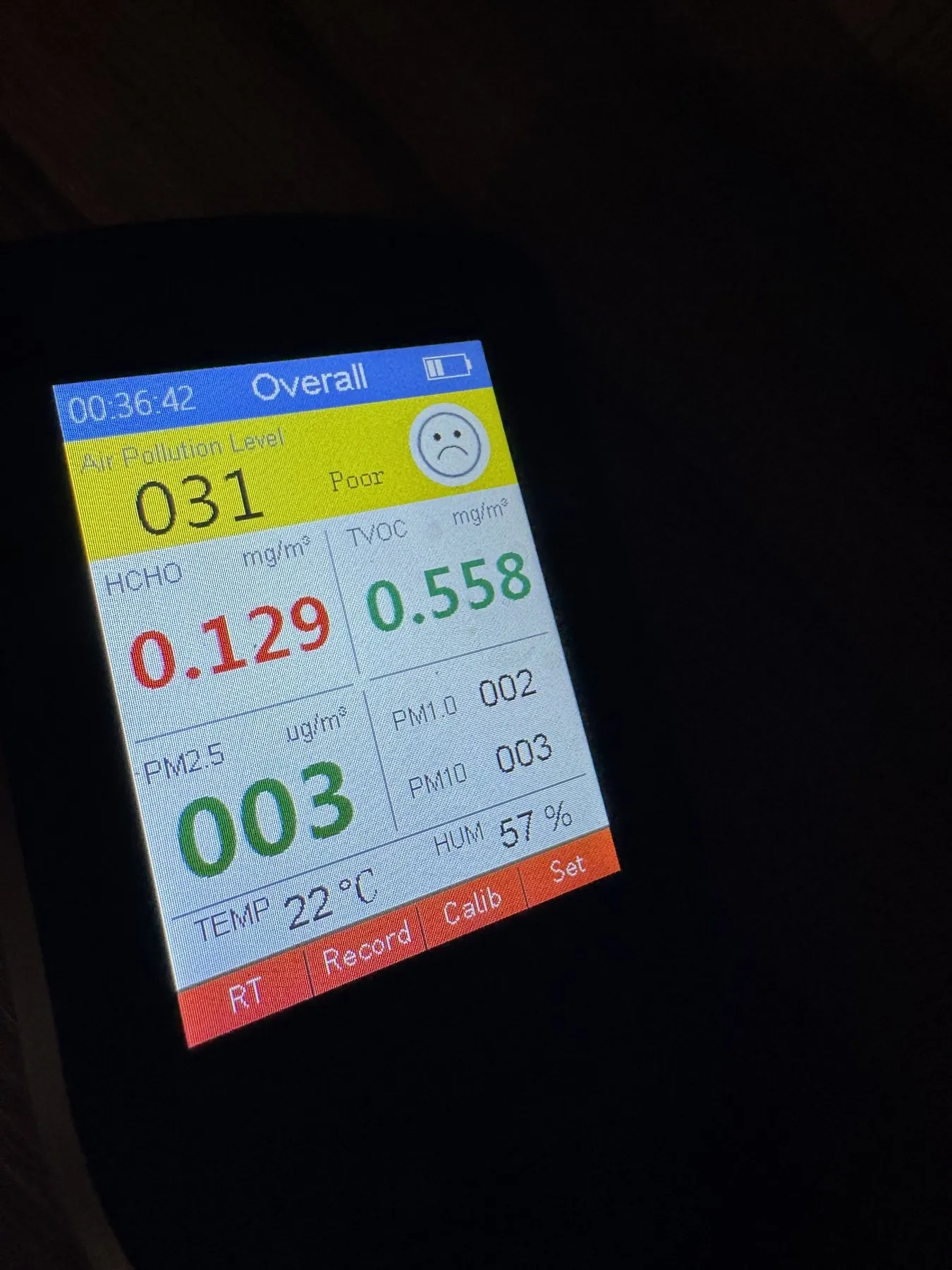
- Humidity, CO₂ and ventilation performance
- Visible and hidden sources of contamination
- Sampling with analysis by an external accredited laboratory
- Assessment and a clear order of action
What I typically find
- High CO₂ levels in closed bedrooms at night, a sign that too little fresh air reaches the room.
- Air conditioning that keeps circulating the same air without sufficient fresh or extract air.
- High relative humidity in individual rooms, while the living area seems fine.
- Moisture trapped in the ceiling void after AC condensation, which eventually affects the indoor air.
- Hidden mould behind furniture, in cupboards or in voids as the source of a musty smell.
- Return air paths that are blocked or missing, so the air does not flow through the apartment as intended.
How it works
- 01Conversation
Which complaints, in which rooms, at what times? What has changed recently: a renovation, water damage, new furniture, a different way of running the AC?
- 02Indicator measurements
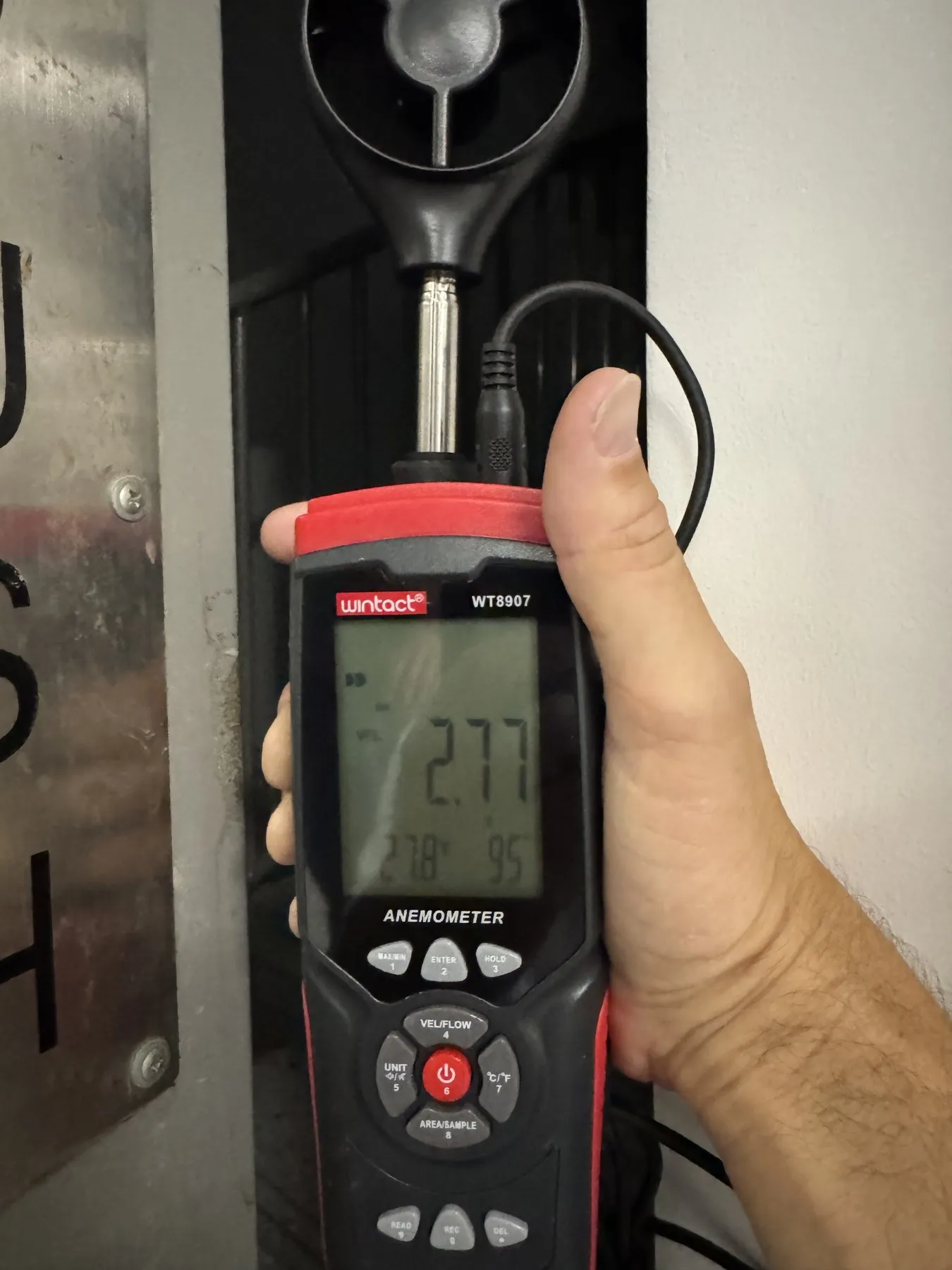
Humidity, temperature, CO₂ and airflow, in the affected rooms and at the times when the problem occurs.
- 03Looking for sources
Visible and hidden sources are checked, with endoscopy into voids and a close look at the air conditioning and the ventilation paths.
- 04Sampling
Where the suspicion justifies it, air or material samples are taken on site. The analysis is carried out by an external accredited laboratory.
- 05Assessment and order of action
The results are assessed against the applicable Dubai Municipality requirements and turned into measures in a clear order.
Measure before you guess
Headaches, a musty smell, children who are often unwell: the causes can range from a simple ventilation problem to moisture and mould to actual contaminants. Guessing leads to expensive measures in the wrong place. I begin with what can be measured on site, and I only take samples where the result changes the decision.
Humidity and CO₂ are good indicators. CO₂ shows how well a room is ventilated relative to the number of people using it. Humidity shows whether moisture is being removed. Neither replaces a laboratory analysis, but together they often show where to look.
Readings need a place and a time
A single reading in the middle of the room says little. Conditions in a bedroom at night with the door closed can be very different from those in the afternoon. That is why measurements are taken where people actually spend their time, and when the complaints occur.
For moisture, mould and indoor air quality, the Technical Guideline for Mould Remediation and Control issued by Dubai Municipality and the Dubai Municipality Green Building Regulations apply in addition to the Dubai Building Code. My assessment is based on them.
Sampling is a tool, not a ritual
Samples are taken where the suspicion justifies them and where the result changes the next step. Which parameters are analysed is agreed with the laboratory according to the question. The analysis itself is carried out by an external accredited laboratory. My task is to take the samples correctly on site, to put the results into the context of the building and to explain them to you.
An elevated value is not yet a cause. The report links the laboratory results to what was found in the property, for example a damp ceiling void, an AC that circulates without dehumidifying or a hidden leak, and names the measures that address that source.
Why it matters
Headaches, a musty smell, children who are often unwell. It is worth measuring before you guess.
What this inspection is not
- Laboratory analysis is carried out by an external accredited laboratory. I take the samples and interpret the results in the context of the building.
- No medical assessment. Health questions belong with a doctor. The report describes the building and the indoor air.
- No remediation or cleaning work. The recommendation names the measure, not the contractor.