Room by room, using measurement rather than a visual walk-through: moisture, levelness and falls, functional testing of plumbing, electrical and air conditioning, waterproofing and junctions. You receive a defect list ranked by severity, with photographs and locations, ready to submit to the developer.
Who this is for
- You bought off-plan and the developer has invited you to the handover of your apartment, townhouse or villa.
- You live abroad and cannot attend the handover yourself, but you want someone on site who reads the unit for you before you accept it.
- You already received a handover checklist from the developer and want an independent view, not the developer’s own.
- You plan to let the unit straight away and need to know that the air conditioning, plumbing and drainage work before the first tenant moves in.
- You have bought a villa with a terrace, roof areas or a pool, where waterproofing and falls decide how the building behaves in the first heavy rain.
What I check
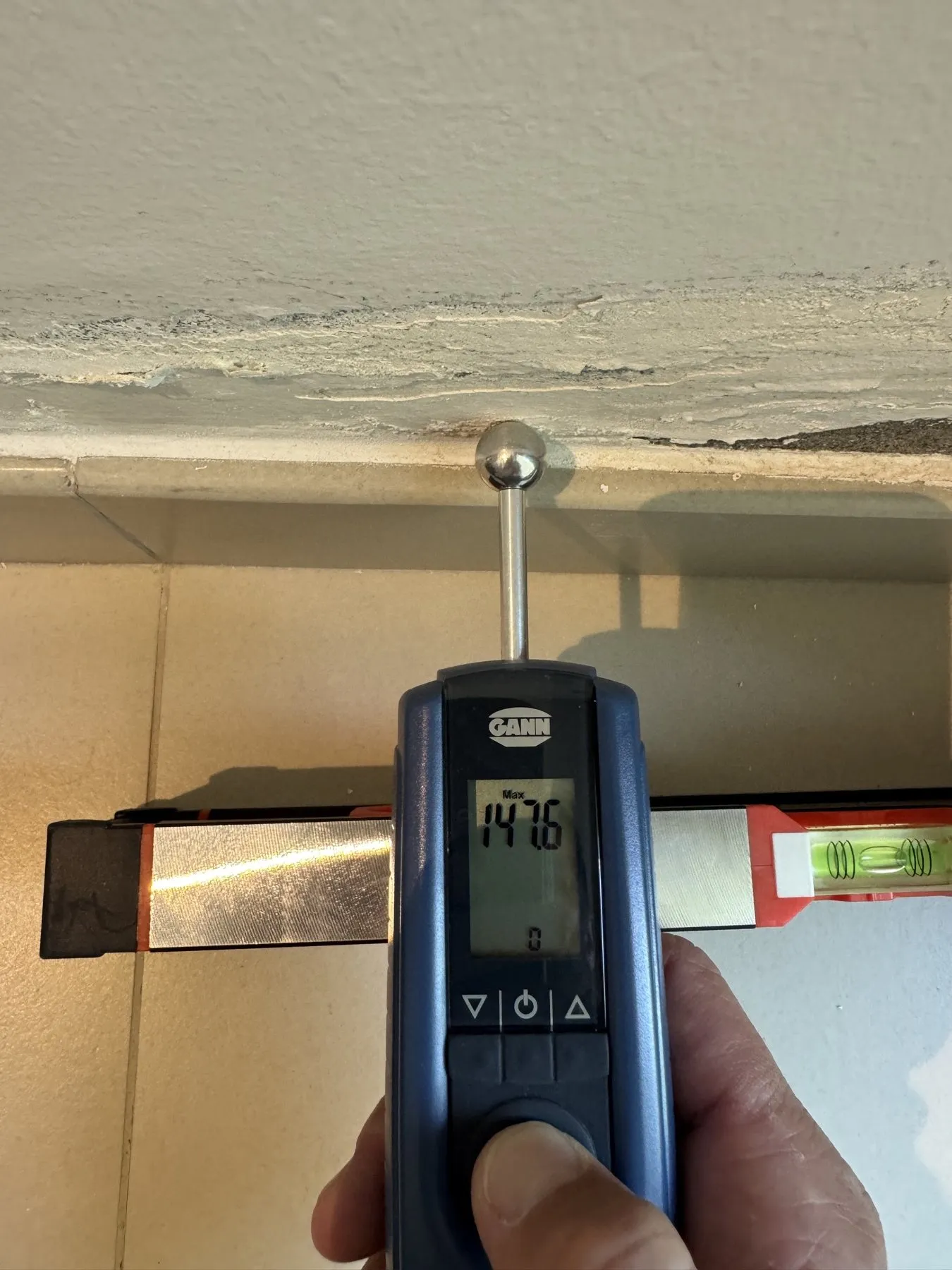
- Moisture readings at wet areas, façades and junctions
- Levelness, falls to drains and tile workmanship: cracked, scratched or hollow tiles, found by tapping
- Water pressure at the taps, and drains that actually drain
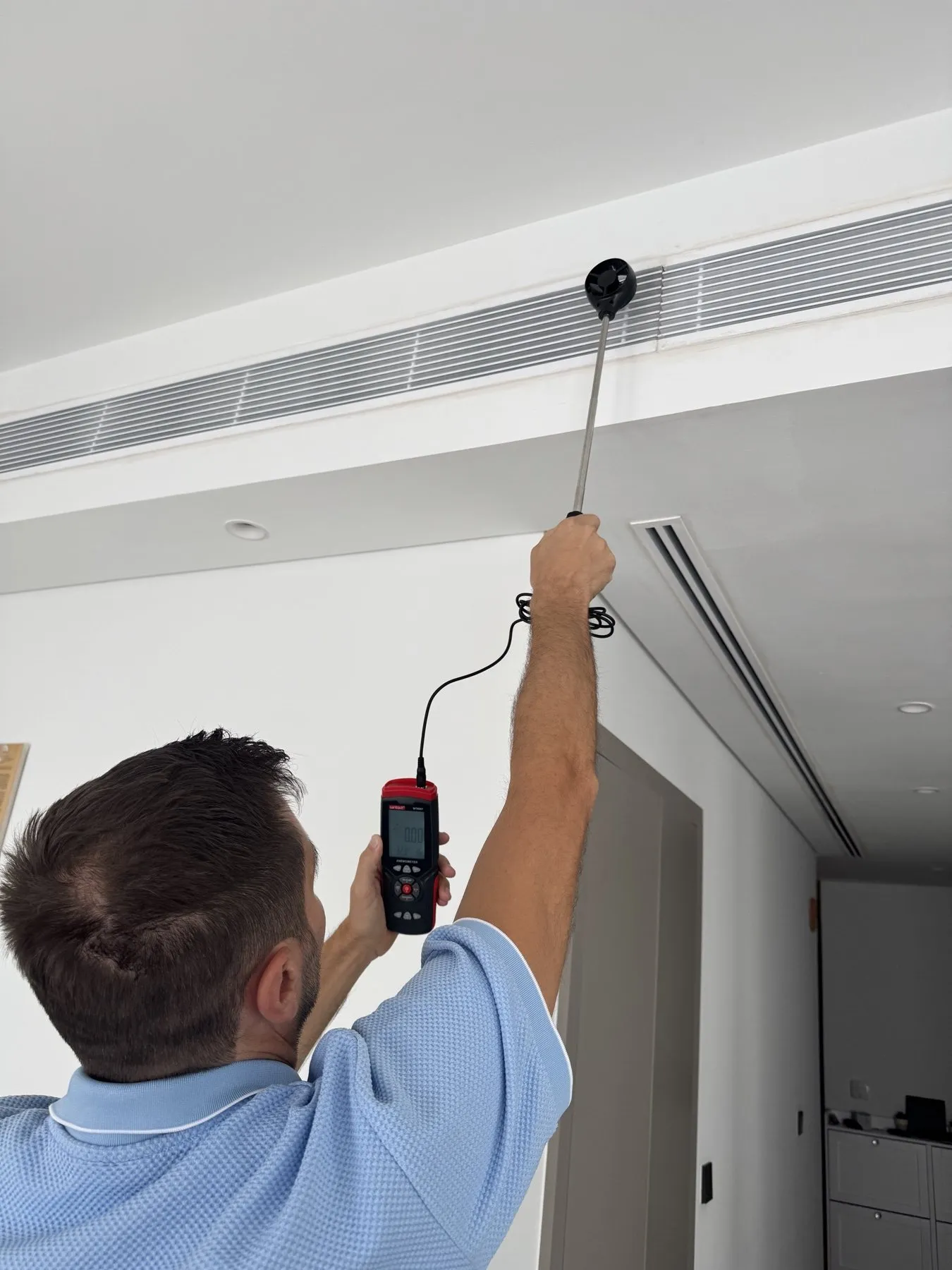
- Functional test of plumbing, drainage, electrics and air conditioning, including airflow
- Waterproofing details, sealant joints and penetrations
- Thermography where it adds insight, for example at electrical connections or possible leaks
What I typically find
- Hollow tiles that sound different when tapped, often on terraces, in showers and along thresholds.
- Shower floors and balconies without a proper fall, so water stands instead of reaching the drain.
- Water pressure that varies from tap to tap, and drains that are slow or do not drain at all.
- Air conditioning outlets with weak or uneven airflow, and condensate lines that are not routed or fixed properly.
- Sealant joints that are incomplete, smeared or missing at penetrations, junctions and around sanitary fittings.
- Damage behind access panels: pipe routing, open insulation, first traces of moisture that no handover walk ever looks at.
- Scratched, chipped or cracked surfaces, doors that do not close cleanly and fittings that are loose. Ordinary snags, recorded without drama, but recorded.
How it works
- 01Documents first
Before the appointment I look at what you have: the developer’s handover invitation, floor plans and any checklist. That tells me which areas need particular attention.
- 02Room by room on site
I work through every room in a fixed order, with moisture meter, spirit level, tapping rod, water pressure gauge and airflow measurement at the AC outlets. Thermography only where it explains something.
- 03Behind the panels
Access panels, shafts and the areas under sinks are opened and inspected where this is possible without damage. This is where leaks and poor workmanship show first.
- 04Ranked defect list
Every item is photographed, located and classified by severity, so the developer’s customer care team can work through it without asking what is meant.
- 05Re-inspection after rectification
On request I come back once the developer reports the items as fixed and check whether they actually are.
Why measurement and not just a walk-through
A new unit is clean, freshly painted and usually looks good. Most defects that become expensive later are not visible on that day. A tile that sounds hollow will crack under load. A shower floor with too little fall leaves standing water that eventually finds a joint. A wall that is damp behind fresh paint shows nothing until the stain appears months later.
That is why I measure rather than look. The moisture meter tells me whether a wall next to a shower is dry. The spirit level tells me whether a floor drains. The water pressure gauge tells me whether a tap delivers what it should. A thermal image can help, for example at electrical connections or to trace a pipe, but it shows temperature differences, not moisture. Whether a cold spot is really wet is decided by the moisture probe.
What the handover cannot show you
In Dubai, handovers almost always take place in dry weather and often before the building has been through a summer. Many components are exposed for the first time to the high temperatures typical of Dubai once you live there. Where movement joints, material transitions or junctions were not adequately considered, thermal expansion can lead to cracks or detachment. The first heavy rain then shows whether waterproofing and drainage work.
A handover inspection cannot predict all of this. What it can do is record the condition on the day, identify the weak points that are already visible or measurable, and give you a dated baseline. If something changes later, you can show that it was not there, or that it was already noted, at handover.
A snag list the developer can work with
A snag list helps you only if the developer’s team can act on it. Vague items such as “bathroom not good” lead to discussion. An item such as “master bathroom, shower tray, standing water near the wall, fall towards the drain insufficient, photo 14” leads to a repair. I structure the list so that each defect has a location, a photograph, a short description and a severity.
I also separate what is a defect from what is a matter of taste. That keeps the list credible. A developer who sees that the list is factual is more likely to deal with it quickly.
Air conditioning: air in, air out
An AC system in Dubai does two jobs: it cools and it removes moisture from the air. At handover I check airflow at the outlets and look at the condensate drainage, because a system that circulates air without removing enough moisture can cause condensation and mould later, even in a room that feels cool. I also look at whether air can actually return: supply and extract need to work together.
Why it matters
A snag list only helps you if the developer cannot argue with it. Every item is located, photographed and ranked, so the defect gets fixed instead of discussed.
What this inspection is not
- No destructive opening. I do not remove tiles, drill walls or open sealed ceilings without the owner’s consent.
- No repair work. True Line inspects and documents. The developer is responsible for rectifying the defects.
- No guarantee that every concealed defect or every leak that only appears in heavy rain will be found. The report records what is visible and measurable on the day.
- No legal advice on your contract with the developer. If a finding has legal consequences, I recommend involving a lawyer.