Moisture measurement and location of the source, assessment of the growth, sampling with analysis, evaluation and a remediation concept. A mould finding without the cause behind it is worthless, because the growth returns.
Who this is for
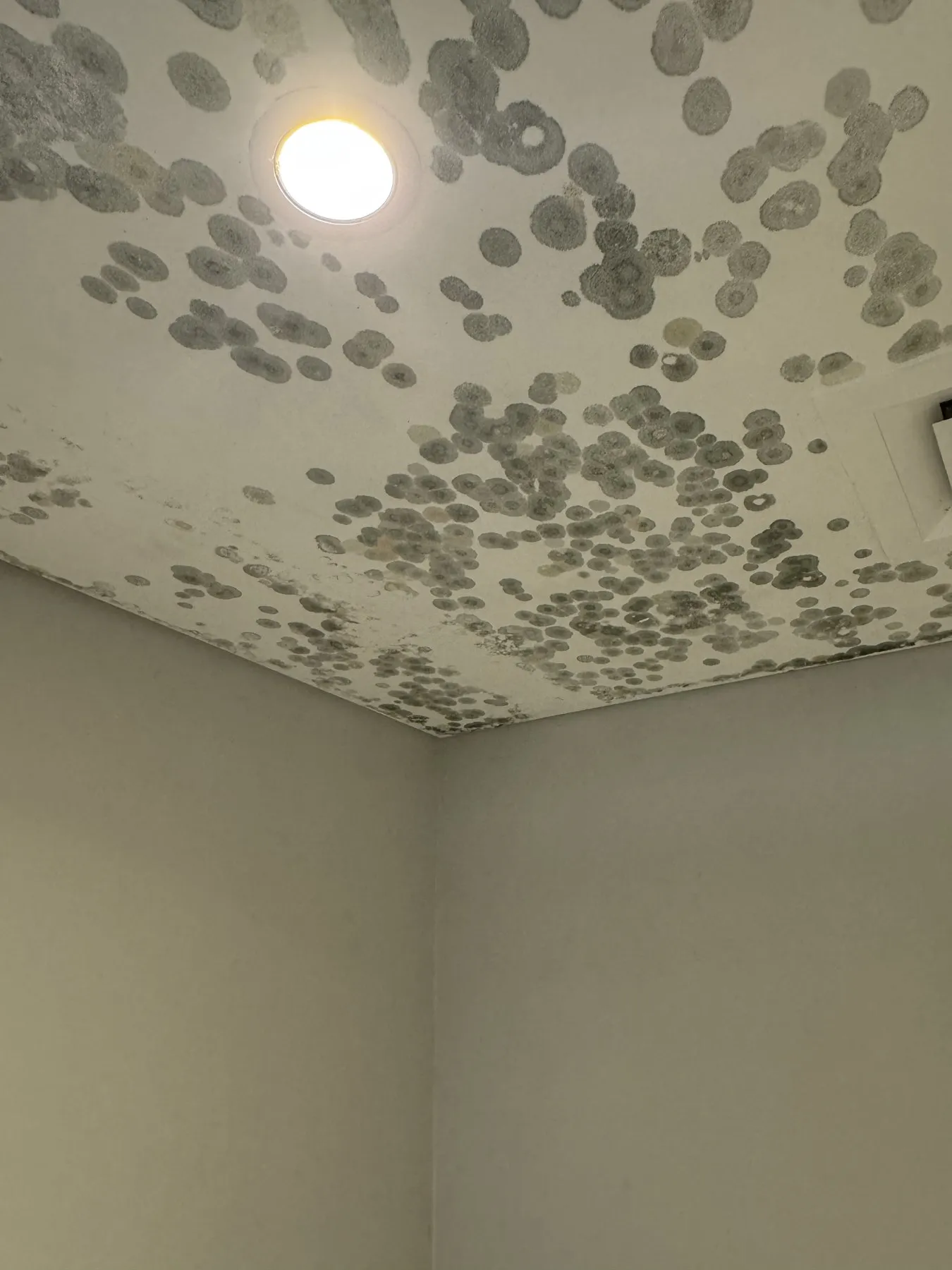
- Dark spots keep returning on the ceiling, behind a wardrobe or around a window, even after cleaning.
- The apartment smells musty, although it is cooled all day.
- Water droplets form on windows, ducts or AC grilles.
- You are a tenant and want to know whether the cause lies in the building, in the air conditioning or in the way it is run.
- You are an owner and need to know what has to be remediated before you instruct a company.
- Someone in the household reacts to the indoor climate, and you want clarity before you decide anything.
What I check
- Moisture measurement with high-quality instruments, applied correctly
- Air conditioning: supply and return airflow, dehumidification
- Smoke test that makes airflow and leaky window seals visible
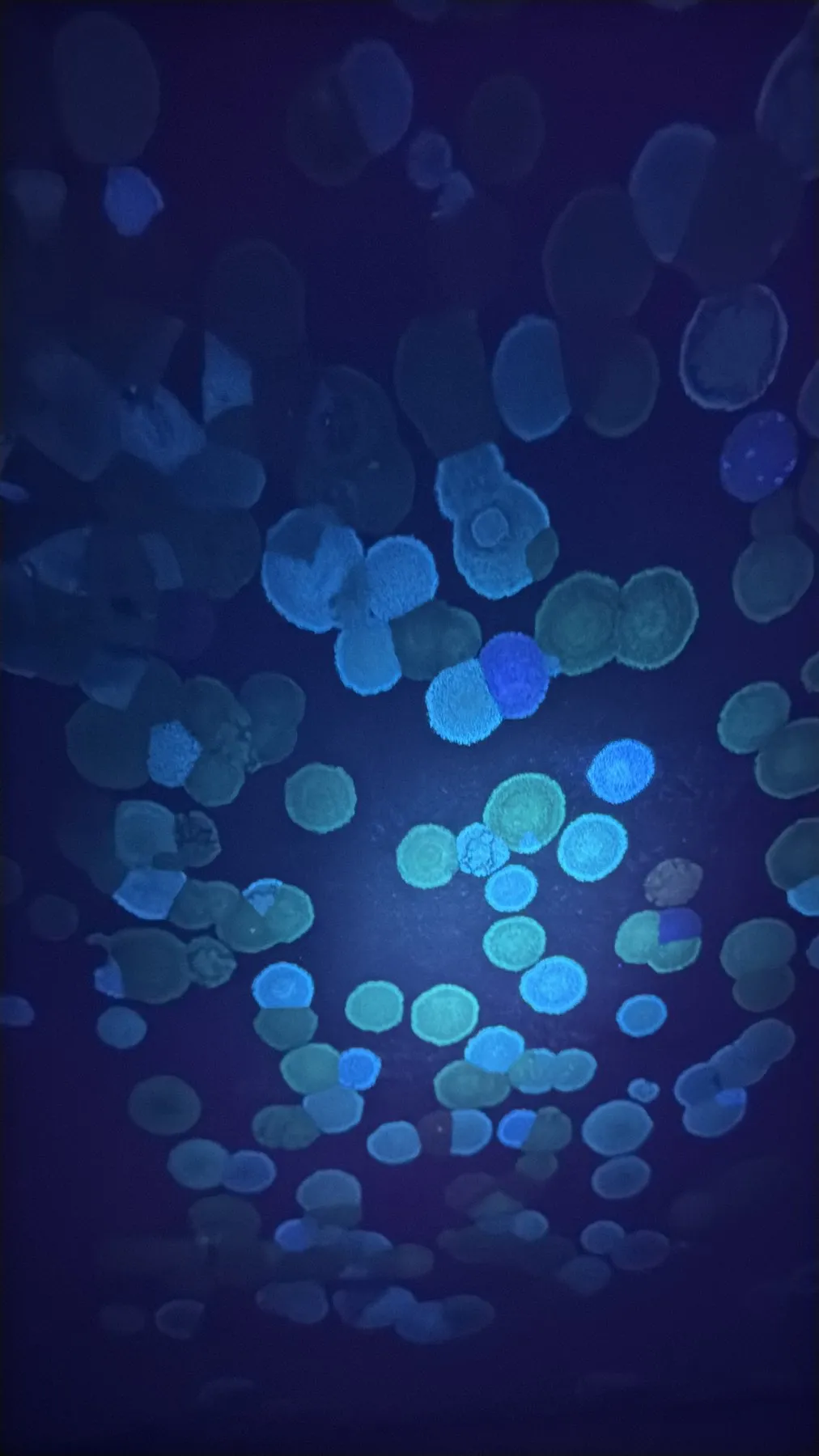
- UV inspection that shows what was cleaned, painted over or hidden
- Air or surface samples taken on site, analysis by an external accredited laboratory
- Assessment against the Dubai Municipality mould remediation guideline
What I typically find
- Air conditioning that cools but hardly dehumidifies, because design, setting or operation do not match the moisture load.
- An imbalance between supply and return air that creates negative pressure and draws humid outside air in.
- Leaky window seals and gaps in the building envelope, made visible with the smoke test.
- Condensation on cold surfaces: ducts, chilled pipes, window frames, walls behind furniture.
- Blocked or leaking condensate lines that keep the ceiling void damp for months.
- Hidden leaks behind access panels and in wet rooms.
- Growth on the concealed side of gypsum board, while the room side shows only a faint mark.
- Earlier mould that was painted over and is now coming through again.
How it works
- 01Conversation and history
When did it start, in which rooms, when is it worse, and how is the AC run? Your observations already narrow the search.
- 02Measurement
Moisture in walls, ceilings and floors, the room climate, and the airflow at supply and return grilles. Readings are taken where the problem occurs, not only in the middle of the room.
- 03Tracing the source
Smoke test for airflow and leaks, endoscopy into voids, a UV visual check for residues and areas that were covered, and thermal imaging where a temperature pattern helps to explain the finding.
- 04Sampling
Where the question requires it, air or surface samples are taken on site and analysed by an external accredited laboratory.
- 05Assessment and remediation concept
Cause, extent of the growth and affected materials are assessed together, against the Dubai Municipality guideline, and turned into a remediation concept in a clear order.
Mould at 40 °C outside: how does that add up?
It sounds contradictory, but in a cooled building the same physics applies as at a cold window in winter. When the actual surface temperature falls below the dew point of the air immediately next to it, water can condense there. The outdoor temperature alone does not answer the question.
An illustrative calculation: air at 30 °C and 70 per cent relative humidity has a dew point of around 24 °C. If that air reaches a surface at 22 °C, condensation can form. These are example values, not measurements. And the temperature set on the AC remote is not a surface temperature. What counts for a wall, a window or a pipe is the temperature directly at that surface.
A cool room is not a dry room
An air conditioning system can remove moisture while it cools, but only if design, operation and condensate drainage suit the actual moisture load. A room that feels pleasantly cool does not prove adequate humidity control. If supply and extract air are out of balance, negative pressure can draw humid outside air in through gaps, doors and leaky window seals.
That is why I measure the airflow at both grilles and use the smoke test to make air movement visible. A key question from building physics is whether a component can dry out between periods of moisture exposure. If more moisture arrives than can leave, the material stays damp, and that is where growth begins.
One reading is not enough
Room temperature and relative humidity are important, but a single reading in the middle of the room does not rule out critical conditions in a particular place or at a particular time. On a cooler wall behind a wardrobe, or in a corner with little air movement, the humidity directly at the surface can be considerably higher. Mould does not need visible droplets either. Measurements therefore have to match where and when the problem occurs.
The visible stain does not show the full extent
Moisture and growth can sit on the hidden side of a material or inside a void. Equally, a dark mark does not prove extensive hidden damage. Visible signs are a reason to investigate. They do not decide the result in advance.
Confirmed growth needs attention in its own right, alongside its moisture source. Cleaning the air conditioning can be part of the measures where components are contaminated, but what matters is removing the actual cause and making sure moisture can leave again. Depending on the findings, that means the condensate drainage, the airflow, the dehumidification or the junctions of the building envelope.
Why it matters
In Dubai, mould very often starts with an air conditioning system that runs but does not dehumidify. Painting over it treats the symptom. Finding the cause stops it.
What this inspection is not
- The laboratory analysis is carried out by an external accredited laboratory, not by me. The UV lamp is a visual check only and never identifies or excludes mould.
- A thermal image shows temperature differences, not moisture. It can explain a finding, but it does not prove it.
- No destructive opening without your consent and no remediation work. The concept names the measures, not the contractor.
- A photograph alone cannot establish the moisture source or confirm microbial growth. That requires an investigation on site.