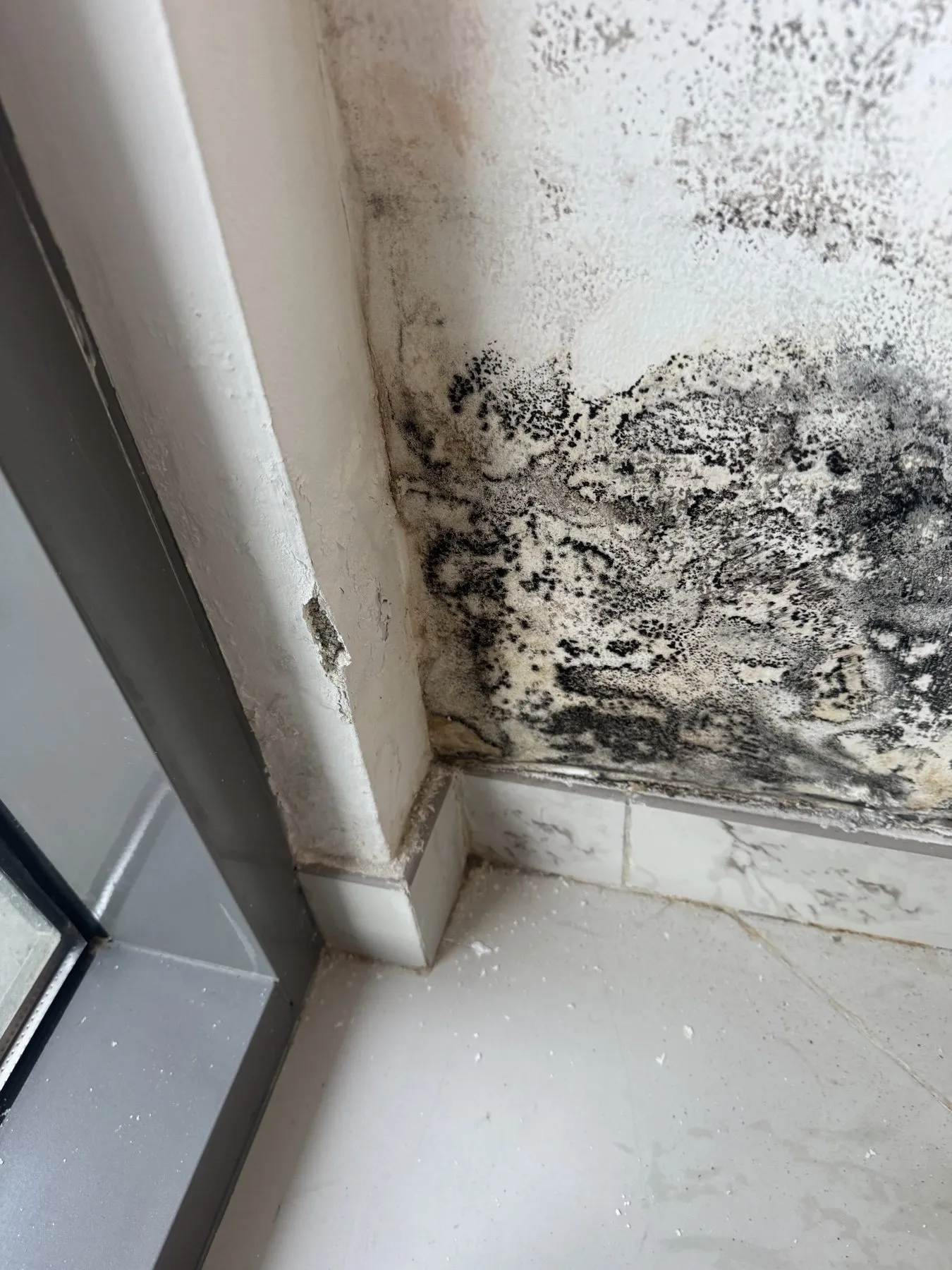
A condition survey before a remediation: which components and areas are affected, to what extent, and what really has to be remediated? The survey defines the scope before quotations are obtained, so that every quotation is based on the same scope and can be compared.

Who this is for
- After water damage or a leak, several companies have quoted, and the quotations describe completely different work.
- A mould or moisture problem has been found, and you need to know which areas really have to be remediated.
- You are planning to renovate an older villa and want to know its condition before you obtain quotations.
- A building manager or a group of owners needs a neutral basis for tendering a remediation in common areas.
- Two parties disagree about the extent of a damage and need a neutral description of what is affected.
What I check
- Affected components and areas recorded
- Moisture measurement and cause, as far as needed to define the scope
- What has to be remediated and what does not
- Quantities and order of the measures
- A report as the basis for tender and quotations
What I typically find
- Quotations that renew whole surfaces where only part is affected, or the reverse.
- Proposed measures that treat the visible damage while the moisture source remains active.
- Wet areas that extend beyond the visible stain, into adjacent walls, floors or the ceiling void.
- Components that look damaged but are dry and sound, and do not need replacing.
- Hidden services behind panels that have to be considered in the order of works.
- Measures planned in the wrong order, for example new finishes before the substrate has dried.
How it works
- 01Question and history
What happened, what has been done so far, and which quotations or reports already exist?
- 02Recording the condition
Affected components and areas are recorded room by room, measured where needed, photographed and located.
- 03Cause, as far as needed
Moisture measurement and the investigation of the cause go as far as is necessary to define the scope. A remediation that leaves the cause active is money wasted.
- 04Defining the scope
What has to be remediated and what does not, in what quantities and in which order.
- 05Report as a common basis
The report goes to the companies you choose, so that every quotation is based on the same scope.
- 06On request: comparison and quality control
I can compare the quotations technically and carry out independent quality control during the works. The decision remains yours.
Why quotations cannot be compared without a defined scope
If each company defines the scope itself, you are not comparing prices but different ideas of the work. One proposal renews the entire wall, another only the visible stain, a third leaves out the drying entirely. The cheapest quotation is not necessarily the best, and the most expensive one is not necessarily the most thorough.
A defined scope turns this around. Every company prices the same work, deviations become visible, and you can ask specific questions. It is also the moment to check whether a proposed measure addresses the cause or only the symptom.
As much as necessary, as little as possible
The aim is not precautionary renovation but a targeted one. Where a component is dry and sound, it stays. Where moisture has spread beyond the visible damage, the scope has to cover that as well, otherwise the damage returns and the remediation is paid for twice.
With older villas in particular, more usually comes to light once the first walls are opened. The report therefore states what has been confirmed by measurement and where uncertainties remain, so that you can plan for them instead of being surprised by them.
Practice, not only paper
Because I also know execution from practice, I can judge whether a measure can actually be delivered on site and what a waterproofing detail withstands through a Dubai summer. A scope that reads well on paper and fails in execution is of no use to you.
My recommendation names the necessary measure, not the contractor. On request I help you obtain quotations from suitable companies and compare them technically, without commission. My execution company True Novaleix is not involved in this process.
Why it matters
Without a defined scope, quotations cannot be compared, and you often end up paying for more than was necessary, or for less than the damage needs.
What this inspection is not
- No remediation work and no recommendation of a specific contractor. True Novaleix takes no part in the process.
- No destructive opening without your consent. Hidden areas that could not be opened are marked as open points.
- The survey defines the work, not the price. Prices come from the quotations, and True Line does not prepare valuations.