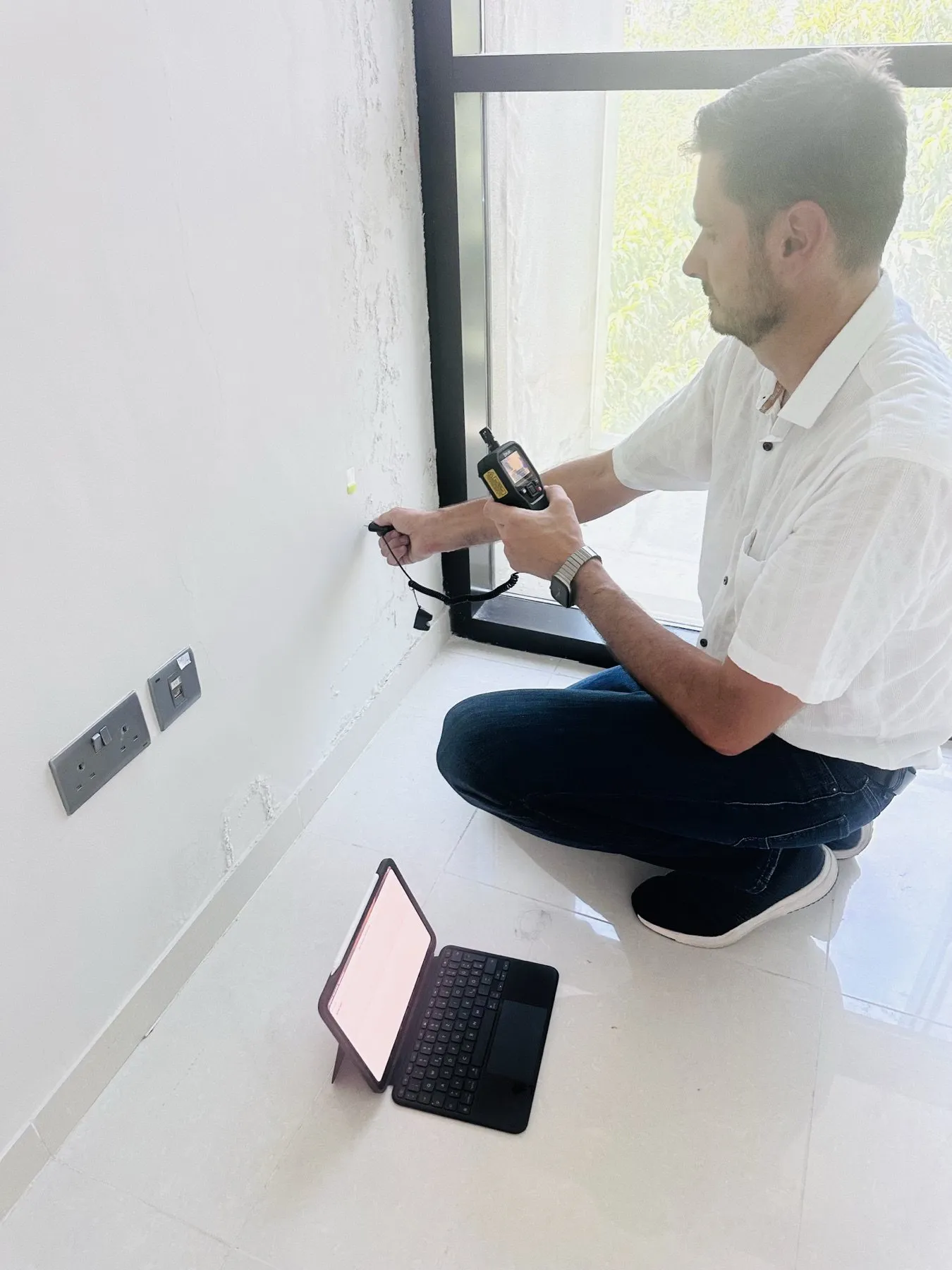
A systematic record of the condition of the property, room by room. It covers the general structural condition, the condition of the building services and other critical areas. On request, additional investigations such as moisture measurements are carried out. The aim is a traceable and meaningful record of the condition of the property before the sale, and at the same time the identification of significant defects and any remedial works that may be required.
Who this is for
- You are planning to sell your apartment or villa and want to know its technical condition before a buyer’s inspector tells you.
- You know of a past leak or damp problem and want to show a buyer that the cause, not only the surface, was dealt with.
- You want to decide which repairs are worth doing before the sale and which are not.
- You own the property from abroad and need an independent picture of its condition before you instruct an agent.
- Your tenant is moving out and you want to use the moment to record the condition and prepare the property for the market.
What I check
- Condition room by room, with photo record and location
- General structural condition
- Condition of the building services
- Other critical areas
- Additional investigations on request, such as moisture measurements
- Significant defects and any remedial works that may be required
What I typically find
- Moisture behind fresh paint or behind built-in furniture that a buyer’s inspector with a moisture meter will find.
- AC systems that run but cool unevenly, with condensate traces at outlets or in the ceiling.
- Hardened or detached sealants at wet areas, windows and terraces, often simple to renew before the sale.
- Drains on terraces and balconies restricted by debris, and falls that let water stand.
- Hollow or cracked tiles, hairline cracks and doors that do not close cleanly.
- Earlier repairs where it is unclear whether the cause was removed, which raise questions in any negotiation.
How it works
- 01Purpose and scope
We agree what the record should cover, whether moisture measurements or other additional investigations should be included, and how you intend to use it.
- 02Room by room on site
I record the condition of every room, the general structural condition, the building services and other critical areas, with photographs and locations.
- 03Additional investigations
Where agreed, moisture measurements and other methods are used at the points where the record needs them.
- 04Report with priorities
You receive the record together with the significant defects and the remedial works that may be required, ranked by priority.
- 05Check after repairs
On request I check after the remedial works whether they actually worked, so the record reflects the condition you are selling.
Know your property before the buyer does
Buyers in Dubai are becoming more technical, especially owner-occupiers and international families. More and more of them ask about air conditioning, drainage, waterproofing, snagging history and maintenance records, and many bring their own inspector. If that inspector finds a damp wall or a failing AC unit that you did not know about, the negotiation starts from a weak position.
A condition record before the sale reverses that order. You know what a buyer’s inspector is likely to find, you can decide what to repair, and you can answer questions with documents rather than assurances.
Targeted repairs instead of cosmetic covering
Freshly painting over a stain is the most common way to prepare a property for sale, and the one an experienced buyer trusts least. A freshly painted ceiling does not tell anyone whether the cause of an earlier leak was removed, and a buyer’s inspector with a moisture meter will find out.
The record shows which defects matter and what their likely cause is. That lets you have the necessary remedial works carried out in a targeted way: renew sealants, clear drains, have the condensate drainage of the AC checked, fix the cause of a damp patch. Small, well-documented repairs often do more for the sale than an expensive cosmetic refresh.
Before the rainy season
Viewings take place almost always in dry weather, and so do most inspections. A property that has a weak point at a roof junction or a terrace threshold may show it for the first time in the next heavy rain, possibly after the buyer has moved in. Checking waterproofing and drainage before the rainy season protects you from a dispute you would rather avoid.
Why it matters
The owner gains a sound basis for having the necessary remedial works carried out in a targeted way and for preparing the property for sale in the best possible way. This can improve the market position of the property and may help to achieve a higher sale price.
What this inspection is not
- Not a valuation and no statement on the sale price. True Line does not provide valuations for properties in the UAE.
- Not a guarantee to the buyer. The record documents the condition on the day of inspection; it does not replace the buyer’s own inspection or warrant the absence of concealed defects.
- No destructive opening without your consent, and no repair or remedial work. True Line documents, assesses and recommends.
- No brokerage and no involvement in the sale. I do not recommend agents or buyers.